
Macro Calculator
This macro calculator estimates your daily calories and how to split them across protein, carbs, and fat, based on your body stats, activity level, and goal. It uses the Mifflin-St Jeor equation and runs instantly in your browser.
Macro calculator
How the macro calculator works
This macro calculator runs in two steps. First it estimates your calories: the Mifflin-St Jeor equation gives your basal metabolic rate (the energy you burn at rest), which is multiplied by an activity factor to get your total daily energy expenditure, then adjusted up or down for your goal. Second, it splits those calories into macros using a balanced 30 percent protein, 40 percent carbs, and 30 percent fat ratio - dividing protein and carb calories by 4 and fat calories by 9 to get grams.
Estimates for general information only; not medical or nutrition advice. Calorie and macro needs vary with health, medication, and body composition - consult a doctor or registered dietitian before major diet changes.
A worked example
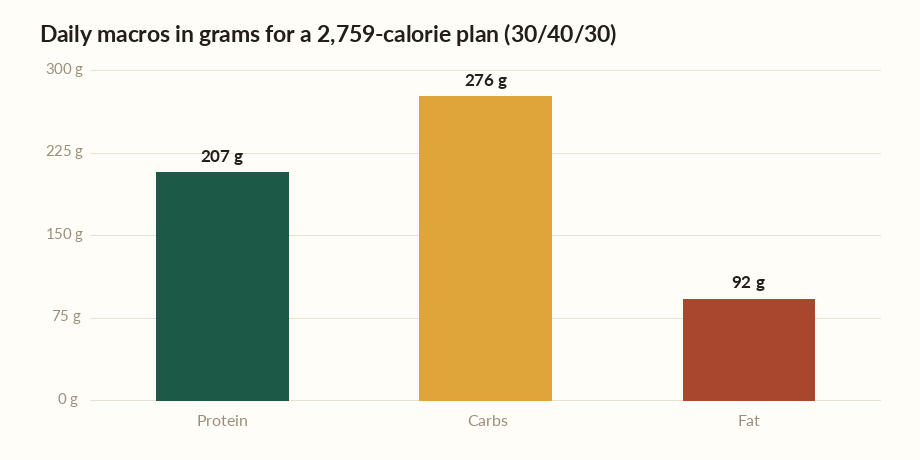
Take a 30-year-old man weighing 80 kg at 180 cm, moderately active and maintaining weight. His BMR is about 1,780 calories; times a 1.55 activity factor gives roughly 2,759 calories a day. Splitting that 30/40/30 yields about 207 grams of protein, 276 grams of carbs, and 92 grams of fat. To lose weight, the calculator trims calories by around 20 percent; to gain, it adds about 15 percent, and the macro grams scale with the new calorie total.
The 30/40/30 split is a solid general-purpose starting point. People chasing specific goals - very high protein for muscle gain, or lower carbs for certain diets - can shift the ratio, but this balance works well for most.
Getting the most from the macro calculator
Macros are a guide, not a straitjacket. Total calories drive weight change most, while the protein target protects muscle and the fat floor supports hormones. Weigh yourself over a couple of weeks and adjust: if the scale is not moving the way you want, nudge calories by 100 to 200 and let the macros recalculate. Food quality still matters - the same grams from whole foods and from junk affect health and hunger very differently.
The Dietary Guidelines for Americans set acceptable macronutrient ranges, and MedlinePlus explains how carbohydrates, protein, and fat each function in the body. Use those alongside this calculator to build a plan you can sustain.
Frequently asked questions
What are macros?
Macros, or macronutrients, are the three nutrients that provide calories: protein and carbohydrates at 4 calories per gram, and fat at 9 calories per gram. Balancing them helps you hit calorie and health goals.
How does the macro calculator estimate calories?
It uses the Mifflin-St Jeor equation to estimate your resting metabolic rate, multiplies by an activity factor for total daily energy, then adjusts for whether you want to lose, maintain, or gain weight.
What is a good macro split?
A balanced 30 percent protein, 40 percent carbs, and 30 percent fat split works for most people. Those building muscle often raise protein, while some diets lower carbs - adjust to fit your goal and preferences.
How many grams of protein, carbs, and fat do I need?
It depends on your calories. For a 2,759-calorie day at 30/40/30, that is about 207 g protein, 276 g carbs, and 92 g fat. Enter your own stats to get personalized numbers.
Do I have to hit my macros exactly?
No. Macros are targets, not rules. Getting reasonably close most days, with your calorie total and protein in range, matters far more than hitting every gram precisely.
Dialing in your nutrition? Pair this with our protein intake calculator and water intake calculator for the full picture.