
Protein Intake Calculator
This protein intake calculator estimates how many grams of protein you should eat per day based on your body weight and goal – from sedentary maintenance to building muscle. It runs instantly in your browser.
How much protein do I need?
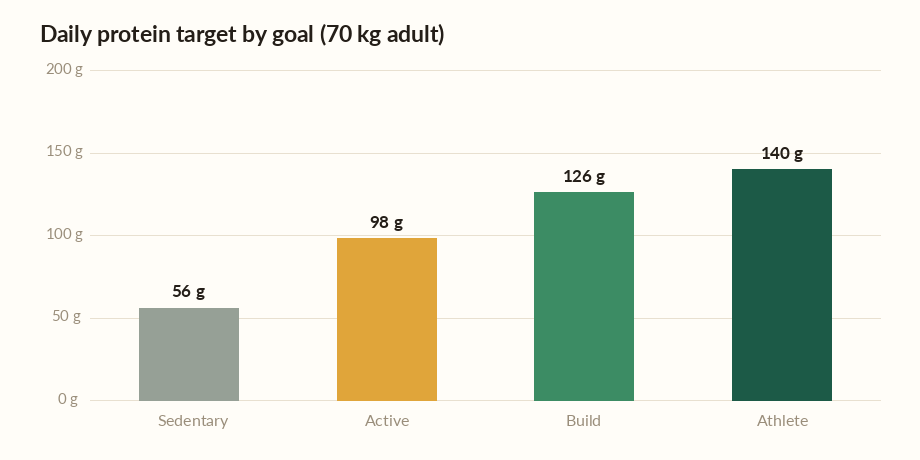
How the protein intake calculator works
Protein needs are usually expressed in grams per kilogram of body weight. The baseline for a sedentary adult is about 0.8 grams per kilogram - the recommended dietary allowance. This protein intake calculator raises that figure as activity increases: roughly 1.4 g/kg for regularly active people, 1.8 g/kg when building muscle, and up to 2.0 g/kg for serious athletes.
Estimates for general information only; not medical, nutrition, or fitness advice. Protein needs vary with health status - consult a doctor or registered dietitian for personal guidance.
A worked example
Consider a 70-kilogram (154-pound) adult. At the sedentary baseline of 0.8 g/kg, the target is about 56 grams of protein a day - a couple of chicken breasts, or a mix of eggs, yogurt, beans, and grains. Someone lifting weights to add muscle at 1.8 g/kg would aim for around 126 grams, and a competitive athlete at 2.0 g/kg for roughly 140 grams.
Spreading protein across the day helps your body use it. Aiming for a similar amount at each of three meals - here about 19 to 47 grams depending on the goal - is more effective for muscle repair than loading it all into dinner.
Getting the most from the protein intake calculator
Higher protein does not always mean better. Beyond roughly 1.6 to 2.2 g/kg, extra protein offers little added benefit for most people building muscle, and the surplus is simply used for energy. Quality and timing matter alongside the total: aim for complete protein sources, and pair intake with strength training if the goal is muscle. People with kidney disease should not raise protein without medical advice.
General guidance from the UC Davis Nutrition Department and the physical-activity recommendations from the Centers for Disease Control and Prevention can help you match protein to your training. This calculator is a planning aid, not a prescription.
Frequently asked questions
How much protein do I need per day?
The baseline is about 0.8 grams per kilogram of body weight for sedentary adults - roughly 56 grams for a 70 kg person. Active people and those building muscle need more, often 1.4 to 2.0 g/kg.
How do I convert protein needs to pounds?
Divide your weight in pounds by 2.2 to get kilograms, then multiply by your grams-per-kilogram target. This calculator does the conversion for you when you enter weight in pounds.
Can I eat too much protein?
For healthy people, moderately high protein is generally safe, but very high intakes offer little extra benefit and displace other nutrients. People with kidney disease should consult a doctor before increasing protein.
Does protein timing matter?
Spreading protein across meals helps muscle repair more than concentrating it in one meal. Aiming for a similar amount at breakfast, lunch, and dinner is a practical approach.
How much protein to build muscle?
Most evidence supports about 1.6 to 2.2 grams per kilogram of body weight per day, combined with strength training, for building muscle. Beyond that range, extra protein adds little.
Planning your full nutrition? Pair this with our macro calculator or check training intensity with the one-rep max calculator.