
Topsoil Calculator
This free topsoil calculator shows how much soil to buy for a raised bed, lawn top-dressing, or fill job. Enter the length, width, and depth to get the volume in cubic yards, cubic feet, and bags.
How much topsoil do you need?
How the topsoil calculator works
The topsoil calculator multiplies length by width to get the area in square feet, multiplies by the depth in feet, and divides by 27 to convert cubic feet into cubic yards – the unit used for bulk delivery. It also shows the volume in cubic feet and the number of common 0.75-cubic-foot (40 lb) bags, so you can weigh bagged soil against a bulk load. The quick formula is square feet × depth in inches ÷ 324 = cubic yards.
How much depth you need depends on the job. Top-dressing a lawn takes only a quarter to half an inch, leveling low spots might need 1 to 2 inches, and filling a raised bed usually calls for 10 to 12 inches or more so roots have room. Because fresh soil is loose and settles once watered, plan on a little extra.
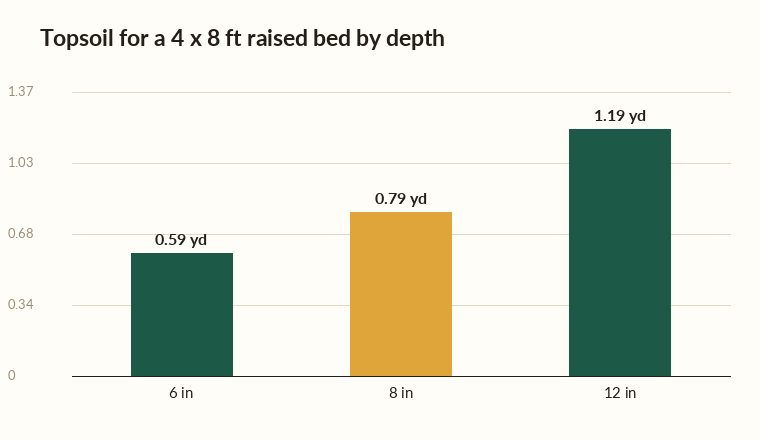
Worked example
For a 4 ft by 8 ft raised bed filled 12 inches deep, the math is 32 square feet × 1 ft = 32 cubic feet, or about 1.19 cubic yards. In bags that is roughly 43 of the 0.75-cubic-foot size. Since compost-rich mixes settle noticeably, ordering about 10% extra – or being ready to top up after a few waterings – keeps the bed full.
Topsoil, garden soil, and raised beds
Plain screened topsoil is a mineral soil best used to fill volume, regrade, or blend with compost. Bagged garden or raised-bed mixes already contain compost and are lighter and more fertile, but cost more per cubic foot. A common approach for raised beds is to combine topsoil with compost so the bed drains well yet stays rich – many gardeners aim for roughly half to two-thirds topsoil with the balance in compost.
University extension programs offer clear guidance on filling beds: the University of Maryland Extension suggests mixing compost with a growing mix and limiting topsoil to a share of the total, while Rutgers NJAES recommends at least 12 inches of imported topsoil for good root-zone depth and drainage.
Ordering tips
Bagged soil is easy to handle and precise for one or two beds, while bulk delivery is cheaper once you need more than about a cubic yard. If you are having soil delivered, ask whether the quote is for loose or settled volume, and break irregular areas into rectangles, calculating each one separately before adding them up.
Frequently asked questions
How much topsoil do I need?
Enter the length, width, and depth of the area and the calculator returns cubic yards, cubic feet, and bag count. One cubic yard covers about 100 square feet at 3 inches deep or fills a 4 by 8 foot bed to roughly 10 inches.
How many bags of topsoil are in a cubic yard?
A cubic yard is 27 cubic feet, so it equals about 36 bags of the common 0.75-cubic-foot (40 lb) size, or 27 bags if they hold a full cubic foot. Check the bag label, since sizes vary.
How deep should topsoil be for a raised bed?
Most vegetables do well with 10 to 12 inches of soil, and root crops appreciate more. For top-dressing a lawn, a quarter to half an inch is plenty.
Is topsoil the same as garden soil?
No. Topsoil is a mineral fill soil, while garden or raised-bed mixes add compost for fertility and lighter texture. Many gardeners blend topsoil with compost to get both structure and nutrients.
Should I order extra topsoil?
Yes. Loose and compost-rich soils settle after watering, so add about 10% and be prepared to top the bed up once during the first season.