
Baking Pan Conversion Calculator
Only have a 9×13 when the recipe wants two 8-inch rounds? This baking pan conversion calculator compares the surface area of each pan and gives you the exact factor to scale the batter, so the depth and bake time stay sensible.
Swap pan sizes without ruining the bake
How the baking pan conversion calculator works
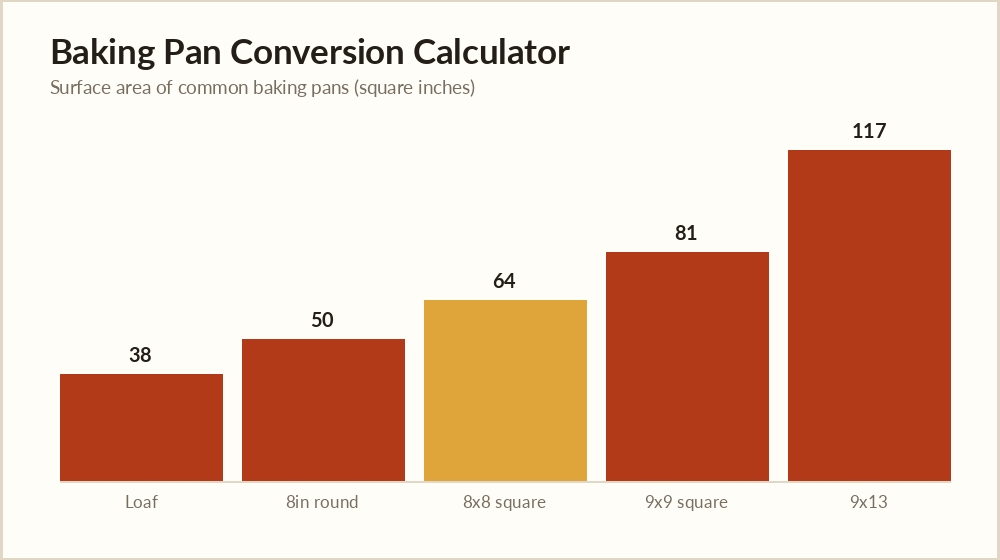
Batter fills a pan by area, so the right comparison between two pans is their surface area, not their name. The baking pan conversion calculator stores the area of each common pan and divides the new pan area by the original to produce a scale factor. Swap an 8-inch round (about 50 square inches) for a 9×13 (about 117 square inches) and the factor is roughly 2.3, meaning you need more than double the batter.
Pick the pan the recipe uses and the pan you actually own, and the tool returns the scale factor plus the percentage change in capacity. Multiply every ingredient by that factor, keeping in mind that whole eggs may need rounding.
A worked example
A brownie recipe is written for an 8×8 square pan (64 square inches) but you want to use a 9×13 (117 square inches). The calculator returns a scale factor of about 1.83 and a capacity change of plus 83 percent, so scale the recipe up by roughly 1.8 and expect a slightly thinner, faster-baking result.
Downsizing works identically. Moving from a 9×13 to an 8-inch round gives a factor near 0.43, so you use a little under half the batter. Because the layer is a similar depth, the bake time stays close to the original.
Adjusting bake time after a pan swap
A scale factor keeps the batter volume right, but bake time follows depth. A wider, shallower pan bakes faster, while a deeper one takes longer, so start checking 5 to 10 minutes before the original time and rely on visual and toothpick cues. Filling a pan more than two-thirds deep risks overflow, a warning the King Arthur Baking success guide stresses for tall batters.
When you scale the batter you will also rescale ingredients, so the cups to grams calculator and the King Arthur weight chart help keep the new amounts precise. For a temperature change alongside the pan swap, use the oven temperature converter, all linked from the kitchen calculators hub.
Frequently asked questions
Can I use a 9×13 instead of two 8-inch rounds?
Often yes. Two 8-inch rounds hold about 100 square inches combined, close to a 9×13 at 117 square inches, so the batter fits with only a small scale adjustment. The calculator shows the exact factor.
How do I convert a round pan to a square pan?
Compare their areas. A round pan area is pi times the radius squared, and a square is side times side. The baking pan conversion calculator does this automatically for common sizes.
Does changing pans change the baking time?
Yes, because time depends on how deep the batter sits. Shallower pans bake faster and deeper pans slower, so check for doneness earlier or later than the original recipe states.
How full should I fill a cake pan?
Fill to about half to two-thirds deep. Overfilling causes overflow and doming, while underfilling gives a thin, dry layer. The scale factor helps you match the right batter volume.
What if my exact pan is not listed?
Pick the closest size, or calculate the area yourself and compare. Small differences of a few square inches rarely affect the outcome enough to matter.