
Paint Calculator
This free paint calculator estimates how many gallons you need for a room. Enter the length, width, wall height, and number of coats to see the wall area and gallons to buy.
How much paint do you need?
How the paint calculator works
The paint calculator finds the wall area by adding the four wall lengths (twice the room length plus twice the width) and multiplying by the wall height. It multiplies that area by the number of coats, then divides by the coverage rate printed on the can – about 350 square feet per gallon for most interior paints – and rounds up to whole gallons. In short: wall area × coats ÷ coverage = gallons.
Coverage is the number that moves the result the most. A smooth, previously painted wall can stretch a gallon to 400 square feet, while bare drywall, fresh patchwork, or a big color change soaks up paint and can drop real coverage toward 250 square feet. When in doubt, trust the label and prime porous surfaces first.
Worked example
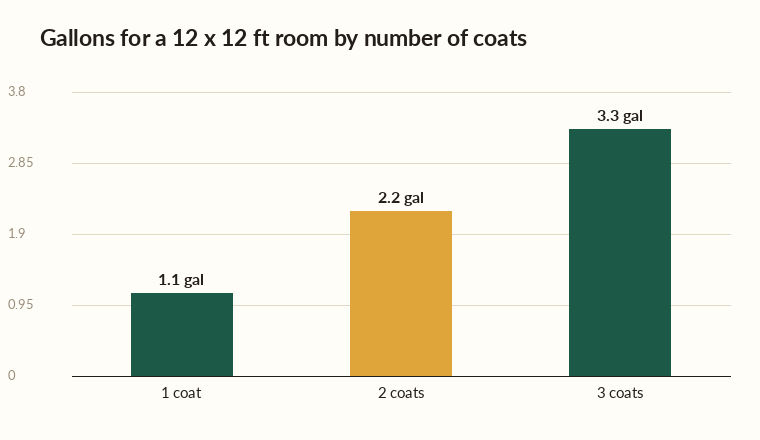
A 12 ft by 12 ft room with 8-foot walls has a perimeter of 48 feet, so the wall area is 48 × 8 = 384 square feet. Two coats means 768 square feet of painting. At 350 square feet per gallon that is about 2.2 gallons, so you would buy 3 gallons – or 2 if you subtract a door and a couple of windows. Buying the next whole gallon leaves a little for touch-ups.
Coats, primer, and color changes
Most jobs need two finish coats for even color and durability. Add a coat of primer when you are painting bare drywall, covering stains, or making a dramatic color change such as dark to light – primer seals the surface so the color coats go on evenly and you often need fewer of them. New drywall is especially thirsty and should always be primed.
If your home was built before 1978, take a moment to read up on lead-safe practices before you scrape or sand. The US EPA explains how to contain dust safely, and the nonprofit PaintCare offers guidance on buying the right amount to reduce leftover paint and waste.
Buying and measuring tips
Measure each room separately and keep ceilings on their own line, since ceiling paint and wall paint are different products. Subtract only large openings – a standard door is about 21 square feet and a window about 15 – and leave small trim in the total for margin. Keep the leftover in a labeled can for touch-ups so future repairs match.
Frequently asked questions
How much paint do I need for a room?
Enter the room length, width, wall height, and number of coats. The calculator returns the wall area and the gallons to buy. A typical 12 by 12 room with 8-foot walls needs about 2 to 3 gallons for two coats.
How many square feet does a gallon of paint cover?
Most interior paints cover 350 to 400 square feet per gallon per coat on smooth, primed walls. Rough or porous surfaces such as bare drywall can drop that to 250 to 300 square feet, so check the label.
How many coats of paint do I need?
Two coats is standard for even color and durability. Add primer or a third coat for bare drywall, stain coverage, or dramatic color changes like dark to light.
Should I subtract doors and windows?
For a rough estimate you can paint the full wall area for margin. For a tighter number, subtract about 21 square feet per door and 15 per large window.
How much extra paint should I buy?
Round up to the next whole gallon and keep the leftover for touch-ups. Buying a little extra avoids a second store trip and color-matching a new batch later.