
Tire Size Calculator
Every tire is stamped with a code like 225/45R17, but those numbers do not tell you the actual size at a glance. This tire size calculator turns the width, aspect ratio and wheel diameter into the overall diameter, sidewall height, circumference and revolutions per mile – the figures you need to compare tires or check a plus-size fitment. Everything runs in your browser and nothing is saved.
Read your tire size
How the tire size calculator works
A tire size like 225/45R17 packs three measurements into one code. The first number, 225, is the tread width in millimetres. The second, 45, is the aspect ratio – the sidewall height as a percentage of the width. The R means radial construction, and 17 is the wheel diameter in inches. The tire size calculator uses these to work out the real dimensions of the tire.
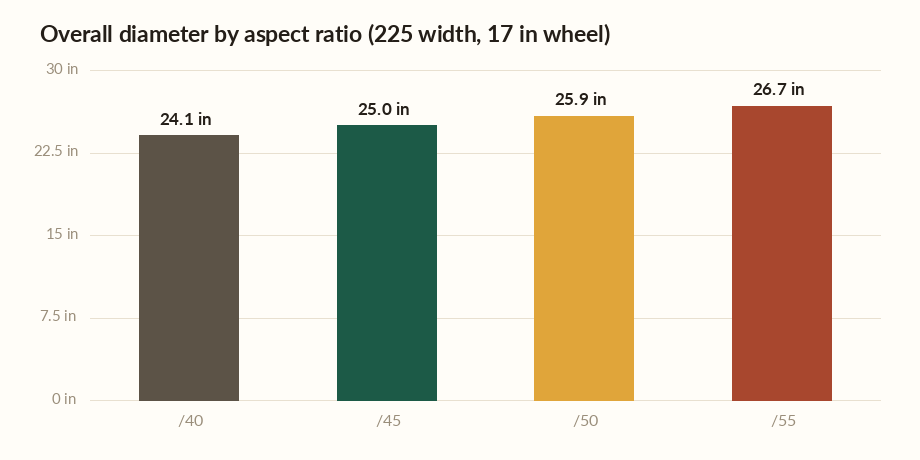
It first finds the sidewall height by multiplying the width by the aspect ratio, giving 101.25 millimetres, or about 3.99 inches, for the default tire. Because there is a sidewall at the top and bottom, it adds two sidewalls to the 17 inch wheel to get an overall diameter of about 24.97 inches. Multiplying by pi gives a circumference of 78.45 inches, and dividing that into the 63,360 inches in a mile gives roughly 808 revolutions per mile.
Why tire dimensions matter
Overall diameter controls your effective gearing and your speedometer reading. Fit a taller tire and the speedometer will read slightly low; fit a shorter one and it reads high. Revolutions per mile is the precise version of this – a tire that turns fewer times per mile covers more ground per rotation, which is why matching this figure keeps the speedometer honest when you change sizes.
Diameter and width also affect clearance, ride and handling. Staying within a few percent of the original diameter is the usual rule for a safe plus-size fitment. Tire choice affects safety and fuel economy too; the National Highway Traffic Safety Administration explains ratings and maintenance in its TireWise guide, and the Department of Energy covers how proper tires protect mileage in its vehicle maintenance tips.
Comparing and plus-sizing tires
When you plus-size, you fit a larger wheel with a lower-profile tire so the overall diameter stays close to stock. Run both the old and new sizes through the calculator and keep the diameters within about three percent of each other. A big jump in diameter can rub the bodywork, throw off the speedometer and confuse traction and stability systems.
The calculator is also handy for shopping. Two tires with different codes can share almost the same overall size, so comparing diameter and circumference tells you whether a deal on an unusual size will actually fit and behave like your current tires.
Frequently asked questions
What does 225/45R17 mean?
225 is the tread width in millimetres, 45 is the sidewall height as a percentage of that width, R means radial construction, and 17 is the wheel diameter in inches. The calculator turns these into real dimensions.
How do I find overall tire diameter?
Multiply the width by the aspect ratio to get the sidewall height, convert it to inches, then add two sidewalls to the wheel diameter. The tire size calculator does this automatically.
Will a different tire size affect my speedometer?
Yes. A larger overall diameter makes the speedometer read slightly low, and a smaller diameter makes it read high. Keeping the new diameter close to stock keeps the reading accurate.
What is a safe plus-size fitment?
A common guideline is to keep the new overall diameter within about three percent of the original. Compare both sizes in the calculator and check clearance before fitting.
What are revolutions per mile?
It is how many times the tire turns to travel one mile, found by dividing 63,360 inches per mile by the tire circumference. Matching it across sizes keeps gearing and the speedometer consistent.
These figures are for general reference; always confirm the correct tire size on your vehicle placard or owner manual. Explore more automotive calculators, or plan a drive with the road trip cost calculator.