
Sleep Calculator
This sleep calculator suggests the best times to go to bed or wake up, based on 90-minute sleep cycles, so you wake at the end of a cycle feeling rested rather than groggy. It runs instantly in your browser.
When should I go to sleep?
How the sleep calculator works
Sleep happens in cycles of roughly 90 minutes, moving from light sleep through deep sleep and REM. Waking in the middle of a cycle – especially during deep sleep – is what leaves you groggy. This sleep calculator counts backward or forward in 90-minute blocks and adds about 15 minutes to fall asleep, so your alarm lands at the end of a cycle instead of the middle.
Estimates for general information only; not medical advice. Persistent sleep problems can signal a health condition – consult a doctor if poor sleep continues.
A worked example
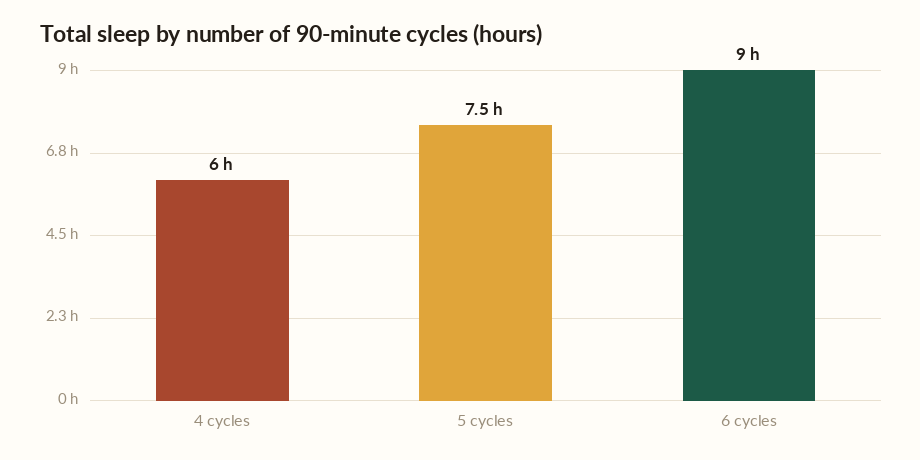
Say you need to wake at 6:30 AM. Six full cycles is 9 hours; counting back 9 hours plus 15 minutes to fall asleep puts your bedtime at about 9:15 PM. Prefer a later night? Five cycles (7.5 hours of sleep) means lights out around 10:45 PM, and four cycles (6 hours) around 12:15 AM. Each option ends at a cycle boundary, which is the gentlest point to wake.
Most adults do best with five to six cycles a night. The 15-minute buffer is an average – if you usually fall asleep faster or slower, nudge the bedtimes accordingly.
Getting the most from the sleep calculator
Cycle timing helps, but total sleep and consistency matter more. Adults generally need seven to nine hours a night, and going to bed and waking at similar times every day strengthens your body clock. Keep the room dark and cool, avoid caffeine late in the day, and put screens away before bed to fall asleep closer to that 15-minute estimate.
The Centers for Disease Control and Prevention recommends at least seven hours of sleep for adults, and the MedlinePlus healthy sleep guide offers practical tips for better rest. Use this calculator as one tool within those broader habits. If you regularly wake before your alarm or feel tired despite a full night in bed, experiment with shifting your bedtime by half a cycle – 45 minutes – in either direction to find the rhythm that leaves you most refreshed.
Frequently asked questions
How does the sleep calculator work?
It counts in 90-minute sleep cycles and adds about 15 minutes to fall asleep, then suggests bedtimes or wake times that land at the end of a cycle, when waking feels easiest.
How many hours of sleep do I need?
Most adults need seven to nine hours a night, which is about five to six 90-minute cycles. Teenagers and children need more. Consistent timing matters as much as the total.
Why do I wake up groggy even after 8 hours?
Waking in the middle of a deep-sleep stage causes grogginess, called sleep inertia. Timing your wake-up to the end of a cycle, as this calculator does, can reduce that heavy feeling.
Are sleep cycles always exactly 90 minutes?
Ninety minutes is an average; real cycles range from about 70 to 120 minutes and vary through the night and between people. Treat the suggested times as close estimates, not exact.
What if I take longer to fall asleep?
The calculator assumes about 15 minutes. If you typically need longer, move your bedtime earlier by the difference so you still complete full cycles before your alarm.
Building healthier daily habits? Pair better sleep with our water intake calculator and macro calculator.